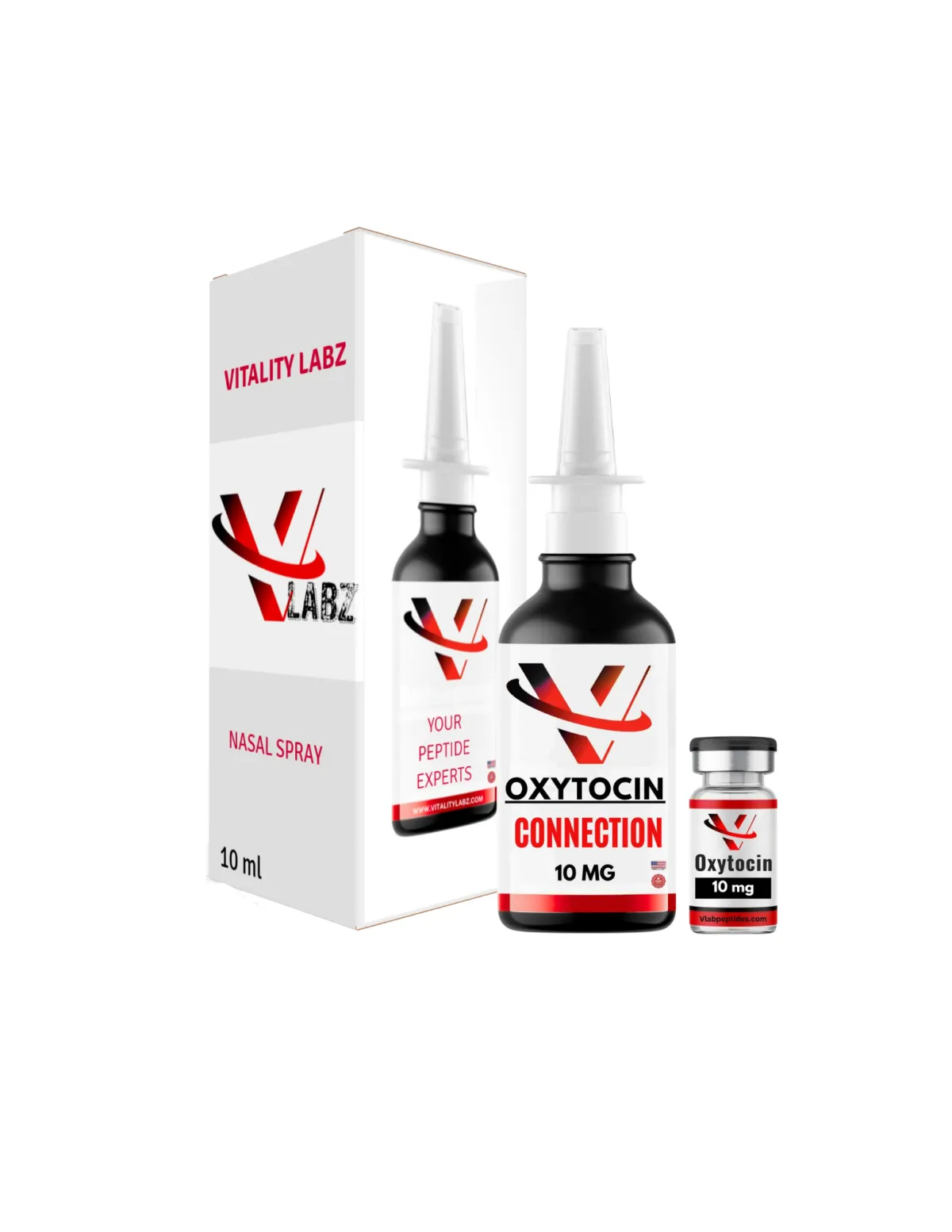
Oxytocin
Oxytocin: From Social Bonding to Metabolic Health and Beyond
By Brock Vanzweden, Co-Founder, Vitality Labz Peptides
Published: December 2025
When most people hear "oxytocin," they think of childbirth or social bonding—the so-called "love hormone." But after years of researching this fascinating peptide, I've discovered it plays far more diverse roles in human health than most realize. From stress regulation to metabolic function, cardiovascular health to inflammation control, oxytocin represents a fundamental signaling molecule with applications that extend far beyond its popular reputation.
Key Insight: Oxytocin is both a hormone and a neurotransmitter, working throughout the body and brain to influence everything from social behavior to cellular metabolism. This dual nature makes it uniquely powerful in supporting multiple aspects of health and wellness.
What is Oxytocin?
Oxytocin is a nine-amino acid peptide hormone produced naturally in the hypothalamus and released by the posterior pituitary gland. While it's famous for its role in childbirth and breastfeeding, oxytocin is actually produced in both men and women throughout life, serving critical functions in social behavior, stress response, and physiological regulation.
The Natural Hormone
Oxytocin is released naturally in response to various stimuli:
Social Interactions: Touch, hugging, positive social engagement
Reproductive Events: Labor, breastfeeding, sexual activity
Stress Relief: Relaxation, massage, positive experiences
Bonding Moments: Intimate conversations, caring for others
Discovery and Understanding
First identified in 1906 and synthesized in 1953 (earning a Nobel Prize), oxytocin has been studied extensively for over a century. However, only in recent decades have researchers begun to appreciate its far-reaching effects beyond reproductive function.
How Oxytocin Works: Multiple Pathways
Central Nervous System Effects
Social Behavior and Bonding
Oxytocin works through specific receptors in the brain to influence:
Trust and social cognition
Emotional bonding and attachment
Recognition of social cues
Empathy and compassion
Reduction of social anxiety
Stress and Anxiety Modulation
Research indicates oxytocin can help regulate stress responses by:
Reducing cortisol levels
Dampening amygdala activity (fear center)
Promoting parasympathetic nervous system activation
Supporting stress resilience and recovery
Peripheral Physiological Effects
Cardiovascular Function
Oxytocin influences heart and blood vessel health through:
Blood pressure regulation
Heart rate modulation
Vascular tone optimization
Anti-inflammatory effects on blood vessels
Metabolic Regulation
Emerging research shows oxytocin affects metabolism by:
Influencing insulin sensitivity
Affecting appetite and satiety
Modulating fat and glucose metabolism
Supporting metabolic flexibility
Anti-Inflammatory Actions
Oxytocin demonstrates anti-inflammatory properties:
Reducing systemic inflammation markers
Supporting tissue healing
Protecting against oxidative stress
Modulating immune system function
The Research Behind Oxytocin
Mental Health and Well-Being Studies
Anxiety and Social Disorders
Research has explored oxytocin for various mental health applications:
Social Anxiety: Reduced fear of social situations
Autism Spectrum: Improved social cognition in some studies
PTSD: Potential benefits for trauma-related symptoms
General Anxiety: Anxiolytic effects in research settings
Mood and Depression
Studies suggest oxytocin may influence mood through:
Enhancing positive emotional processing
Reducing negative rumination
Supporting stress-coping mechanisms
Promoting emotional resilience
Cardiovascular Health Research
Blood Pressure and Heart Health
Clinical studies have shown oxytocin may support cardiovascular health:
Modest reductions in blood pressure
Improved vascular function
Reduced cardiovascular stress responses
Potential cardioprotective effects
Metabolic Health Studies
Weight Management and Metabolism
Exciting research suggests oxytocin may influence metabolism:
Appetite Regulation: Reduced caloric intake in some studies
Fat Metabolism: Enhanced fat oxidation
Insulin Sensitivity: Improved glucose handling
Weight Loss Support: Potential adjunct to lifestyle interventions
Pain and Inflammation Research
Studies indicate oxytocin may have analgesic properties:
Reduced perception of pain
Anti-inflammatory effects
Support for chronic pain conditions
Enhanced healing processes
Practical Applications of Oxytocin
For Stress Management and Emotional Wellness
Stress Reduction Protocol
Regular administration during high-stress periods
Combination with stress-reduction techniques
Support for emotional regulation
Enhancement of social connection benefits
Anxiety Support
Use before anxiety-provoking situations
Support for social anxiety management
Part of comprehensive mental wellness approach
Integration with therapy and counseling
For Relationship and Social Health
Bonding Enhancement
Supporting couples therapy outcomes
Enhancing emotional intimacy
Improving communication and empathy
Strengthening social connections
Sexual Wellness
Supporting intimacy and connection
Enhancing pleasure and satisfaction
Reducing performance anxiety
Promoting emotional bonding
For Metabolic and Physical Health
Weight Management Support
Potential appetite suppression
Support for healthy eating behaviors
Enhancement of metabolic function
Part of comprehensive weight management program
Cardiovascular Support
Blood pressure optimization
Stress-related cardiovascular protection
Support for healthy vascular function
Integration with lifestyle interventions
Research Protocols and Administration
Dosing Considerations
Important Context: Oxytocin dosing varies widely based on application and delivery method. The following is based on research studies and provided for educational purposes.
Intranasal Administration
Most common research route for central effects
Typical doses: 10-40 IU per administration
Rapid absorption to brain and circulation
Effects begin within 30-45 minutes
Duration of 2-4 hours for many effects
Subcutaneous Administration
Research applications: 10mg (6000 IU) typical dose
Slower onset but longer duration
More systemic physiological effects
Better bioavailability than intranasal
Timing and Frequency
Acute Use
Before social situations or stressful events
Prior to therapeutic sessions
As-needed basis for anxiety or stress
Regular Use
Daily administration in some research protocols
Multiple times per week for ongoing benefits
Cycling approaches in some applications
Integration with Lifestyle
Oxytocin may work best when combined with:
Social Engagement: Active participation in relationships
Physical Touch: Hugs, massage, affection
Stress Management: Meditation, yoga, relaxation
Therapy: Counseling or couples therapy
Exercise: Regular physical activity
Safety and Side Effects
Common Observations
Research generally indicates oxytocin is well-tolerated, with few side effects:
Nasal administration: Occasional nasal irritation
Rare reports of headache or dizziness
Transient changes in blood pressure
Generally minimal adverse effects
Important Considerations
Who Should Exercise Caution:
Pregnant or breastfeeding women (due to uterine effects)
Individuals with certain cardiovascular conditions
Those taking medications affecting blood pressure
Anyone with hormone-sensitive conditions
Individual Variability
Response to oxytocin can vary significantly:
Genetic differences in oxytocin receptors
Individual psychological and physiological states
Context-dependent effects (social environment matters)
Dose-dependent responses
Quality and Administration Guidelines
Product Quality Markers
Essential Standards:
98%+ Purity: Verified by HPLC testing
Proper Synthesis: Correct 9-amino acid sequence
Sterility: Essential for injectable forms
Stability: Proper storage and handling maintained
Documentation: Complete Certificate of Analysis
Storage Requirements
Lyophilized Form:
Store at -20°C (freezer)
Protect from light and moisture
Stable for extended periods when properly stored
Reconstituted Form:
Refrigerate at 2-8°C
Use within recommended timeframe (typically 2 weeks)
Bacteriostatic water extends stability
Never freeze after reconstitution
The Psychology of Oxytocin
Context Matters
One fascinating aspect of oxytocin is its context-dependent effects:
Positive Contexts: Enhances trust and bonding
Threatening Contexts: May increase vigilance and protection
Social Environment: Effects amplified by positive interactions
Individual History: Influenced by attachment patterns and experiences
Not Just About Love
While called the "love hormone," oxytocin is more accurately described as a social bonding and stress-regulation molecule that:
Facilitates appropriate social responses
Helps us feel safe and connected
Reduces threat perception in safe environments
Supports both individual and collective well-being
Future Research Directions
Expanding Clinical Applications
Ongoing research explores oxytocin for:
Autism spectrum disorder interventions
PTSD and trauma recovery
Addiction treatment support
Chronic pain management
Metabolic syndrome and obesity
Cardiovascular disease prevention
Novel Delivery Methods
Research into improved administration:
Enhanced intranasal formulations
Oral bioavailable versions
Sustained-release preparations
Targeted delivery systems
Personalized Approaches
Future may include:
Genetic testing for oxytocin receptor variants
Personalized dosing based on individual factors
Optimization based on psychological phenotype
Integration with comprehensive wellness programs
Oxytocin at Vitality Labz
Quality Commitment
Our Oxytocin 10mg (6000 IU) represents pharmaceutical-grade quality:
99%+ Purity: Third-party verified
Correct Sequence: Proper 9-amino acid structure
Sterile Production: GMP-certified manufacturing
Complete Testing: Full analytical panel
Documentation: Certificate of Analysis provided
Key Takeaways
Understanding Oxytocin:
Far more than just a "love hormone"
Works in brain and throughout body
Influences social, emotional, and physical health
Context-dependent effects
Generally safe and well-tolerated
Research Applications:
Stress and anxiety management
Social bonding and relationship health
Cardiovascular support
Metabolic health optimization
Pain and inflammation reduction
Practical Use:
Multiple administration routes available
Works best in positive social contexts
Integration with lifestyle factors important
Individual responses vary
Professional guidance recommended
Conclusion
Oxytocin exemplifies how a single molecule can influence multiple aspects of health and well-being. From its well-known roles in social bonding to emerging applications in metabolic and cardiovascular health, this versatile peptide demonstrates the interconnected nature of our physiological and psychological systems.
At Vitality Labz, we're proud to offer research-grade oxytocin that meets the highest quality standards, supporting both scientific investigation and the growing understanding of this remarkable molecule's potential in human health optimization.
About Brock Vanzweden
Brock Vanzweden is the co-founder of Vitality Labz Peptides and has spent over a decade researching human optimization and longevity.
Connect with Brock: [email protected]
For Research Inquiries
Visit vlabpeptides.com to explore our complete line of research-grade peptides.
All products are third-party tested for purity and intended for research purposes only.
Important Legal and Safety Information
FDA Approval and Regulatory Status
Synthetic oxytocin is FDA-approved for specific medical uses (labor induction, postpartum bleeding). However, research-grade oxytocin from peptide suppliers is not approved for human consumption and is intended for laboratory research purposes only.
Medical Disclaimer
This information is not intended to diagnose, treat, cure, or prevent any disease. The content provided is for educational and informational purposes only. Always consult with qualified healthcare professionals before making any health-related decisions.
Research Use Only
Research-grade oxytocin is intended for laboratory research purposes only. It is not intended for human consumption. Research should only be conducted by qualified personnel in appropriate settings following proper protocols.
Professional Consultation
Before beginning any research involving peptides, consult with qualified professionals including research supervisors, institutional review boards, and legal counsel as appropriate.
By accessing this information, you acknowledge that you have read and understood these disclaimers and agree to use this information solely for educational and research purposes.
