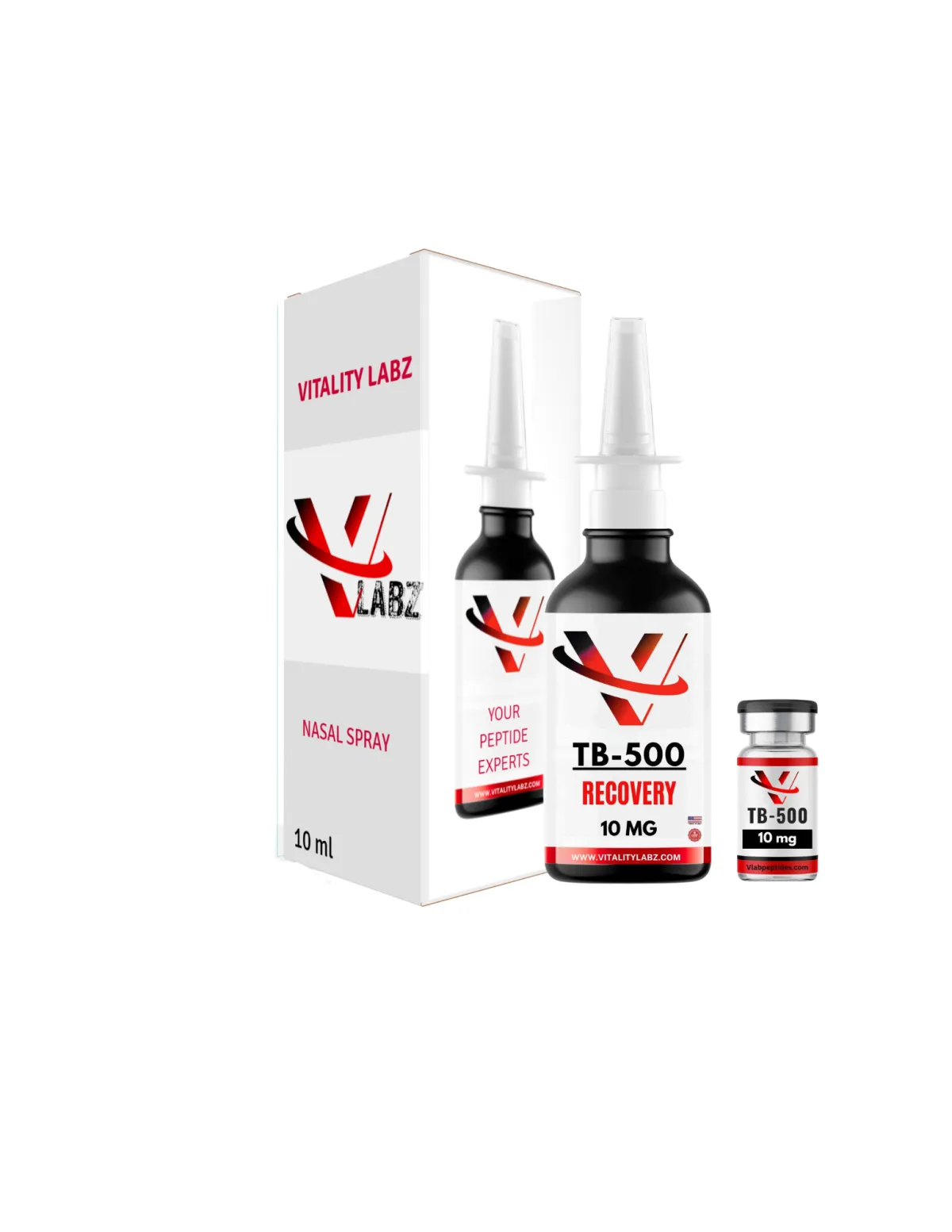
TB-500
TB-500 (Thymosin Beta-4): Unlocking Your Body's Natural Regenerative Potential
By Andrew Davenport, Co-Founder, Vitality Labz Peptides
Published: January 2025
As an athlete and researcher, I've always been fascinated by the body's ability to heal itself. When I discovered TB-500 a decade ago, I realized we were looking at something extraordinary—a peptide that could potentially amplify the body's natural repair mechanisms. Today, I'm sharing what makes TB-500 one of the most researched peptides for tissue regeneration and recovery.
Key Insight: TB-500 is a synthetic version of Thymosin Beta-4, a protein naturally present in virtually all human cells. This ubiquitous presence suggests it plays a fundamental role in cellular health, wound healing, and tissue maintenance—making it a cornerstone of regenerative research.
What is TB-500?
TB-500 is a synthetic peptide consisting of 43 amino acids, designed to mimic the active region of Thymosin Beta-4 (Tβ4), a naturally occurring protein discovered in the thymus gland. While the name TB-500 is commonly used in research circles, it's important to understand its relationship to the natural protein it replicates.
The Natural Origin
Thymosin Beta-4 is one of the most abundant proteins in your body, found in high concentrations in:
Blood platelets (crucial for clotting and wound healing)
Wound fluid (concentrated at injury sites)
White blood cells (immune system components)
Smooth muscle tissues
Cardiac muscle
Stem cells
This wide distribution indicates its fundamental importance in cellular processes, particularly those related to tissue maintenance and repair.
Discovery and Development
Thymosin Beta-4 was first isolated in the 1960s from the thymus gland, an organ crucial for immune system development. Over decades of research, scientists discovered its remarkable properties in wound healing and tissue regeneration. TB-500 was subsequently developed as a synthetic version with enhanced stability and accessibility for research applications.
How TB-500 Works: The Regeneration Mechanism
Primary Mechanisms of Action
Actin Regulation
The fundamental mechanism behind TB-500's effects involves its ability to regulate actin, a protein essential for cellular structure and movement. TB-500 binds to actin monomers, preventing them from polymerizing inappropriately. This regulation enables:
Cell migration to injury sites
Tissue remodeling during healing
Blood vessel formation (angiogenesis)
Cellular differentiation and growth
Angiogenesis Promotion
Research indicates TB-500 promotes the formation of new blood vessels—a process called angiogenesis—which is crucial for:
Delivering oxygen and nutrients to damaged tissues
Removing metabolic waste products
Supporting tissue regeneration
Enhancing overall healing capacity
Anti-Inflammatory Effects
Studies suggest TB-500 may help modulate inflammation by:
Reducing excessive inflammatory responses
Supporting resolution of acute inflammation
Protecting tissues from inflammatory damage
Promoting transition from inflammation to healing
Cell Migration and Differentiation
TB-500 appears to support the migration of various cell types to areas needing repair, including:
Stem cells and progenitor cells
Fibroblasts (tissue-building cells)
Endothelial cells (blood vessel lining)
Keratinocytes (skin cells)
The Research Behind TB-500
Wound Healing Studies
Acute Injury Research
Animal studies have demonstrated TB-500's potential in accelerating wound healing:
Faster Closure: Reduced time to complete wound closure
Improved Quality: Better tissue architecture in healed areas
Reduced Scarring: Potential for less fibrotic scar tissue formation
Enhanced Strength: Improved mechanical properties of healed tissue
Chronic Wound Applications
Research has explored TB-500 for difficult-to-heal wounds:
Diabetic ulcers
Pressure ulcers
Chronic inflammatory wounds
Ischemic tissue injuries
Musculoskeletal Tissue Research
Muscle Injury and Repair
Studies indicate TB-500 may support muscle healing by:
Promoting satellite cell activation and migration
Supporting muscle fiber regeneration
Reducing fibrosis in damaged muscle
Improving functional recovery after injury
Tendon and Ligament Healing
Research suggests potential benefits for connective tissue:
Enhanced collagen organization
Improved tensile strength
Reduced healing time
Better functional outcomes
Cardiovascular Research
Cardiac Protection
Exciting research has explored TB-500 for heart health:
Potential protection after cardiac injury
Support for cardiac muscle cell survival
Promotion of blood vessel growth in cardiac tissue
Possible benefits in ischemic heart conditions
Neuroprotection Studies
Emerging research suggests TB-500 may have applications in nervous system health:
Potential neuroprotective effects
Support for neural tissue repair
Possible benefits in traumatic brain injury models
Exploration in stroke recovery research
Practical Applications for Research
Athletic Performance and Recovery
Acute Injury Protocol
Research protocols for acute sports injuries typically involve:
Early initiation following injury
Regular administration during acute healing phase
Gradual tapering as healing progresses
Integration with standard injury management
Chronic Overuse Injuries
TB-500 has been explored for persistent injuries such as:
Tendinopathies (tennis elbow, Achilles tendonitis)
Chronic muscle strains
Ligament injuries
Joint capsule damage
Post-Surgical Recovery
Research applications in surgical recovery include:
Supporting tissue healing after procedures
Reducing post-surgical inflammation
Potentially minimizing scar tissue formation
Accelerating return to normal function
General Wellness and Prevention
Tissue Maintenance
Some researchers explore TB-500 for general tissue health:
Maintaining flexibility and range of motion
Supporting ongoing tissue repair from daily wear
Potentially reducing accumulated micro-damage
Supporting active aging
Research Protocols and Dosing
Important Context
Research Compound Status: TB-500 is a research peptide and not approved for human therapeutic use. The following information is derived from animal studies and research protocols, provided for educational purposes only.
Typical Research Parameters
Loading Phase
Many research protocols include an initial loading phase:
Higher frequency administration initially
Typically lasting 2-4 weeks
Aims to establish therapeutic levels
Followed by maintenance dosing
Maintenance Phase
Following loading, maintenance protocols typically involve:
Reduced frequency of administration
Ongoing support for tissue health
Duration based on specific research objectives
Can extend for weeks to months
Administration Routes
Research has explored various administration methods:
Subcutaneous: Most common route in research
Intramuscular: Used in some studies
Local injection: Direct administration to injury site in animal studies
Systemic: General circulation for widespread effects
Combination Research
With BPC-157
TB-500 is frequently studied alongside BPC-157 due to complementary mechanisms:
TB-500 focuses on cell migration and angiogenesis
BPC-157 emphasizes tissue protection and repair
Combined use may offer synergistic benefits
Different but complementary action mechanisms
With Other Interventions
Physical therapy and rehabilitation
Nutritional optimization
Other recovery-supporting compounds
Standard medical treatments
Quality and Safety Considerations
Purity and Testing Requirements
Essential Quality Markers
Minimum 98% Purity: Required for reliable research
HPLC Verification: High-performance liquid chromatography testing
Mass Spectrometry: Confirms molecular identity
Endotoxin Testing: Ensures absence of bacterial contamination
Certificate of Analysis: Documentation of all testing
Manufacturing Standards
GMP-certified production facilities
Validated synthesis protocols
Sterile production environment
Batch consistency verification
Storage and Stability
Lyophilized Form
Store at -20°C for optimal long-term stability
Can remain stable at room temperature for 2-3 weeks
Protect from light and humidity
Use desiccant packets in storage
Reconstituted Form
Refrigerate at 2-8°C after reconstitution
Use within 2 weeks when using bacteriostatic water
Sterile water requires faster use (within days)
Never freeze reconstituted peptide
Protect from light exposure
Safety Profile from Research
General Observations
Animal research has generally found TB-500 to be well-tolerated:
Low incidence of adverse effects in most studies
Generally safe profile at research doses
Minimal systemic toxicity observed
Long track record in research settings
Potential Considerations
Injection site reactions (redness, soreness)
Potential for transient fatigue
Possible effects on existing inflammation
Unknown long-term human effects
Contraindications and Cautions
Not appropriate for individuals with active cancers
Caution in those with history of retinal disorders
Avoid during pregnancy and breastfeeding
Professional oversight essential
TB-500 vs. BPC-157: Understanding the Differences
Complementary Mechanisms
TB-500 Primary Actions:
Actin regulation and cell migration
Strong angiogenic effects
Systemic distribution
Longer-acting effects
BPC-157 Primary Actions:
Growth hormone receptor activation
Direct tissue protective effects
Localized action at injury sites
Rapid onset effects
When to Consider Each
TB-500 May Be Preferred For:
Systemic healing support
Blood vessel-related concerns
Chronic tendon/ligament issues
Flexibility and range of motion goals
BPC-157 May Be Preferred For:
Acute local injuries
Gastrointestinal tissue support
Quick recovery needs
More localized tissue concerns
Combined Use:
Many research protocols use both for synergistic benefits, though this should only be done with proper guidance and oversight.
The Future of Regenerative Peptide Research
Clinical Development Potential
TB-500 and Thymosin Beta-4 continue to be investigated for potential clinical applications:
Wound healing in clinical populations
Cardiovascular disease applications
Traumatic injury recovery
Chronic disease tissue damage
Surgical recovery enhancement
Mechanism Understanding
Ongoing research aims to fully elucidate:
Complete signaling pathways involved
Tissue-specific effects and variations
Optimal timing and dosing strategies
Interaction with other healing factors
Genetic factors affecting response
Novel Applications
Emerging research areas include:
Stem cell mobilization and differentiation
Tissue engineering applications
Combination with regenerative medicine techniques
Age-related tissue maintenance
Chronic disease tissue protection
TB-500 at Vitality Labz
Our Quality Commitment
Vitality Labz TB-500 10mg represents our commitment to research excellence:
99%+ Purity: Third-party verified by HPLC and mass spectrometry
Proper Synthesis: Manufactured using validated 43-amino acid sequence
Complete Testing: Full panel including endotoxin and sterility
Optimal Packaging: Lyophilized in sterile vials with proper sealing
Documentation: Complete Certificate of Analysis provided
Supporting Researchers
We provide comprehensive support including:
Access to published research and studies
Storage and handling guidelines
Reconstitution protocols
Ongoing education and updates
Responsive customer support
Key Takeaways
Understanding TB-500:
Synthetic version of naturally occurring Thymosin Beta-4
Fundamental role in tissue repair and regeneration
Extensive research in wound healing and recovery
Promotes angiogenesis and cell migration
Well-studied safety profile in research settings
Research Applications:
Athletic injury recovery and prevention
Post-surgical healing support
Chronic tissue injury management
General tissue maintenance and flexibility
Cardiovascular and neurological research
Practical Considerations:
Quality and purity absolutely essential
Proper storage and handling critical for stability
Loading and maintenance phases in many protocols
Often combined with BPC-157 for synergy
Professional guidance recommended
Conclusion
TB-500 stands as one of the most extensively researched peptides for tissue regeneration and repair. Its foundation in naturally occurring Thymosin Beta-4—a protein present throughout the human body—provides both biological rationale and safety reassurance. From athletic recovery to potential clinical applications, TB-500 represents our growing ability to harness the body's own healing mechanisms.
For researchers exploring regenerative medicine, TB-500 offers a well-characterized tool with diverse applications. Its mechanisms of promoting cell migration, angiogenesis, and tissue repair provide a foundation for investigating numerous healing and recovery processes.
At Vitality Labz, we're committed to providing researchers with the highest quality TB-500, supported by complete testing and documentation. Every batch meets our stringent purity standards, ensuring reliable research outcomes and continued advancement of regenerative medicine science.
About Andrew Davenport
Andrew Davenport is the co-founder of Vitality Labz Peptides and has spent over a decade researching human optimization and regenerative medicine. His passion for helping people understand complex science has made cutting-edge research accessible to thousands.
Connect with Andrew: [email protected]
For Research Inquiries
Visit vlabpeptides.com to explore our complete line of research-grade peptides.
All products are third-party tested for purity and intended for research purposes only.
Important Legal and Safety Information
FDA Approval and Regulatory Status
TB-500 and Thymosin Beta-4 have not been evaluated or approved by the Food and Drug Administration (FDA) for human consumption, therapeutic use, or as dietary supplements. These compounds are intended for laboratory research purposes only.
Medical Disclaimer
This information is not intended to diagnose, treat, cure, or prevent any disease. The content provided is for educational and informational purposes only and should not be construed as medical advice. Always consult with qualified healthcare professionals before making any health-related decisions.
Research Use Only
TB-500 is intended for research purposes only. It is not intended for human or animal consumption. Research should only be conducted by qualified personnel in appropriate laboratory settings following proper safety protocols and institutional oversight.
Quality and Purity Statements
While Vitality Labz provides third-party testing for purity and quality assurance, individual results in research applications may vary. Proper storage, handling, and usage protocols must be followed to maintain compound integrity. We make no guarantees regarding research outcomes or applications.
Professional Consultation
Before beginning any research involving peptides, consult with qualified professionals including research supervisors, institutional review boards, and legal counsel as appropriate. Proper training and oversight are essential for safe and effective research practices.
By accessing this information, you acknowledge that you have read and understood these disclaimers and agree to use this information solely for educational and research purposes.
