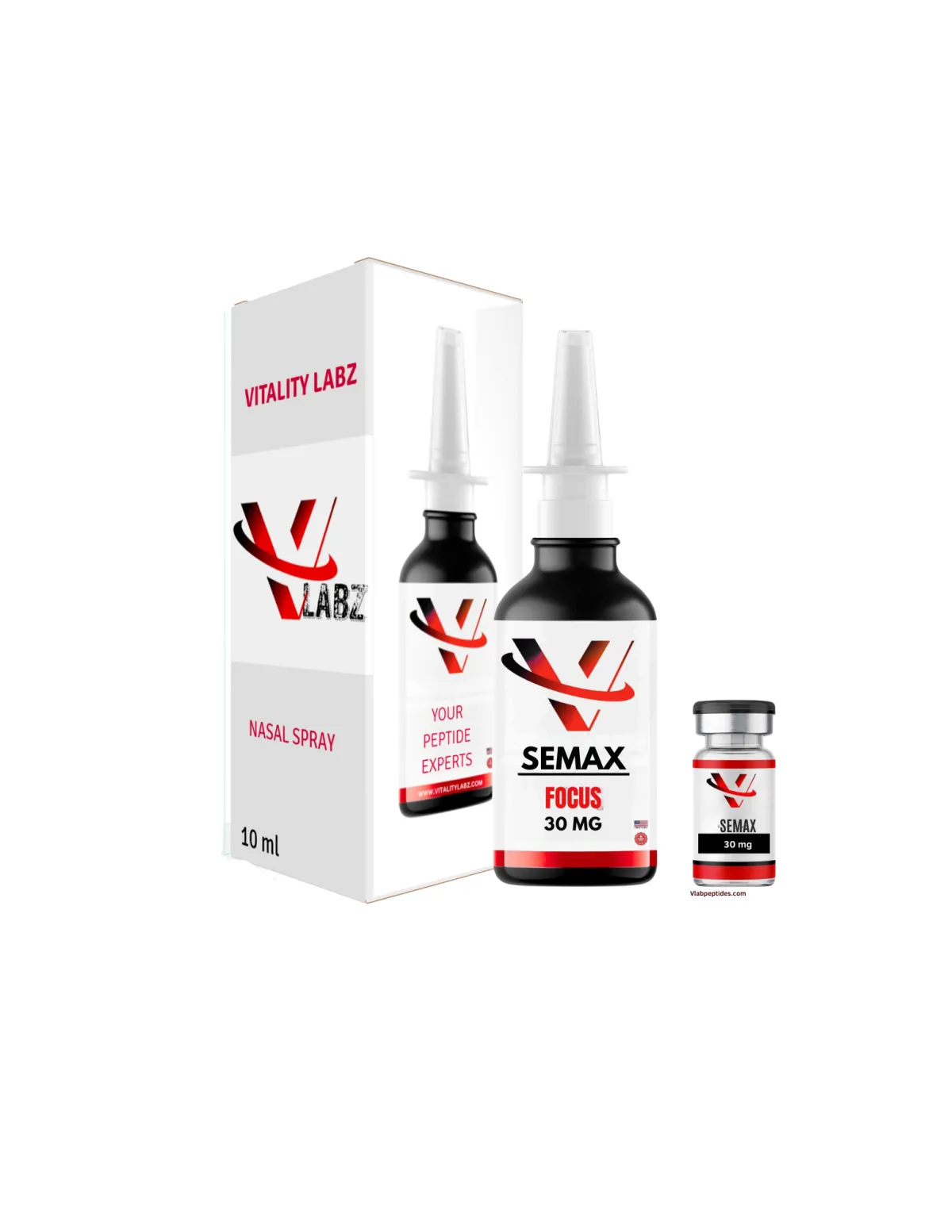
Semax
Semax: Neuroplasticity, Focus, and Brain Health Optimization
By Andrew Davenport, Co-Founder, Vitality Labz Peptides
Published: February 2026
In my decade of researching cognitive enhancement, Semax stands out as one of the most well-studied nootropic peptides. Developed in Russia and approved for clinical use, this ACTH fragment offers profound benefits for focus, memory, and neuroprotection. Today, I'll share what makes Semax a game-changer in cognitive optimization.
Key Insight: Semax is derived from adrenocorticotropic hormone (ACTH) but lacks hormonal activity. Instead, it acts directly on the brain to enhance cognitive function, promote neuroplasticity, and provide neuroprotection.
What is Semax?
Semax is a synthetic heptapeptide (seven amino acids) based on a fragment of ACTH(4-10). Developed by the Institute of Molecular Genetics in Russia, it's been approved there since 1996 for treating cognitive impairments, stroke recovery, and attention disorders.
Development Background
Created to preserve the cognitive benefits of ACTH without hormonal effects, Semax has been:
Used clinically in Russia for nearly 30 years
Prescribed for stroke, traumatic brain injury, and cognitive disorders
Studied extensively for neuroprotection and cognitive enhancement
Shown to have an excellent safety profile
How Semax Works
Neurotrophic Effects
Semax increases brain-derived neurotrophic factor (BDNF), which:
Promotes neuronal growth and survival
Enhances synaptic plasticity
Supports learning and memory formation
Protects against neurodegeneration
Neurotransmitter Modulation
Research shows Semax affects multiple neurotransmitter systems:
Dopamine: Increased levels in striatum and frontal cortex
Serotonin: Enhanced serotonergic activity
Acetylcholine: Improved cholinergic transmission
Norepinephrine: Optimized noradrenergic function
Neuroprotective Mechanisms
Semax protects the brain through:
Inhibiting nitric oxide synthesis (reduces oxidative stress)
Improving cerebral blood flow
Enhancing oxygen utilization
Reducing excitotoxicity
Supporting mitochondrial function
The Research Evidence
Cognitive Enhancement Studies
Clinical research demonstrates:
Attention and Focus: Significant improvements in concentration
Memory Enhancement: Better encoding and recall
Processing Speed: Faster information processing
Mental Clarity: Reduced brain fog
Executive Function: Improved decision-making and planning
Neurological Recovery Research
Studies in stroke and brain injury show:
Accelerated recovery of cognitive functions
Reduced neurological deficits
Enhanced neuroplasticity during rehabilitation
Improved long-term outcomes
Neuroprotection against further damage
ADHD and Attention Studies
Research in attention disorders indicates:
Improved attention span and focus
Reduced impulsivity
Better task completion
Enhanced academic/work performance
Non-stimulant mechanism
Practical Applications
For Cognitive Performance
Professional and Academic Enhancement
Improved focus during demanding mental work
Enhanced learning capacity
Better retention of complex information
Increased productivity
Sustained mental energy
Creative Work
Enhanced associative thinking
Improved problem-solving
Better pattern recognition
Increased mental flexibility
For Brain Health
Neuroprotection
Protection against age-related cognitive decline
Support for healthy brain aging
Reduced oxidative stress
Enhanced cerebral blood flow
Recovery Support
Post-concussion cognitive support
Stroke recovery enhancement
Traumatic brain injury rehabilitation
Support after neurosurgery
For Mood and Motivation
Emotional Well-Being
Mood enhancement through dopamine/serotonin
Reduced mental fatigue
Improved stress resilience
Enhanced motivation and drive
Research Protocols
Dosing Guidelines
Common Research Parameters:
Intranasal: 0.3-1.2mg per administration
Subcutaneous: Similar range with longer duration
Frequency: Once or twice daily
Duration: Cycles of 2-4 weeks common
Administration Methods
Nasal Spray
Rapid onset (15-30 minutes)
Direct CNS access
Convenient for daily use
Most common route
Subcutaneous Injection
Longer duration (4-8 hours)
Higher systemic bioavailability
Less frequent dosing
More sustained effects
Timing Optimization
Best results with:
Morning administration for all-day benefits
Before cognitively demanding tasks
Consistent daily use for cumulative effects
Cycling approaches for some users
Safety Profile
Clinical Safety Data
Decades of Russian clinical use show:
Excellent safety profile
Minimal side effects
No addiction potential
Well-tolerated long-term
Safe in elderly populations
No significant drug interactions
Reported Effects
Occasional observations:
Mild stimulation (less than caffeine)
Rare reports of restlessness at high doses
Nasal irritation with spray formulation
Individual response variability
Contraindications
Caution advised for:
Those with severe anxiety (may increase arousal)
Individuals with seizure disorders (limited data)
Pregnant or breastfeeding women (insufficient data)
Quality Considerations
Research-grade Semax requires:
98%+ Purity: HPLC verified
Correct Sequence: Proper ACTH fragment
Sterility: For nasal or injectable use
Stability: Proper storage conditions
Documentation: Certificate of Analysis
Comparison with Other Nootropics
Semax vs. Stimulants
No Jitters: Smooth focus without anxiety
No Crash: Sustained benefits without rebound
Neuroprotective: Long-term brain health benefits
Non-Addictive: No dependency development
Semax vs. Racetams
Broader Mechanism: Multiple neurotransmitter systems
Neuroprotection: More robust protective effects
Clinical Approval: Pharmaceutical status in Russia
Faster Onset: Noticeable effects within days
Key Takeaways
Understanding Semax:
ACTH-derived peptide without hormonal effects
Approved pharmaceutical in Russia since 1996
Enhances cognition through multiple mechanisms
Provides neuroprotection and neuroplasticity
Research Evidence:
Effective for cognitive enhancement
Supports neurological recovery
Improves attention and focus
Excellent safety profile
Decades of clinical use
Practical Use:
Intranasal administration most common
Daily use for consistent benefits
Works quickly (within days)
Suitable for long-term use
No addiction or tolerance
Conclusion
Semax represents one of the most thoroughly researched and clinically validated nootropic peptides available. Its combination of cognitive enhancement, neuroprotection, and excellent safety profile makes it a cornerstone of brain optimization research. At Vitality Labz, we're proud to offer pharmaceutical-grade Semax to support cognitive research and optimization.
About Andrew Davenport
Andrew Davenport is the co-founder of Vitality Labz Peptides and has spent over a decade researching human optimization.
Connect with Andrew: [email protected]
Important Legal and Safety Information
Semax is approved in Russia but not by the U.S. FDA. Research-grade Semax is intended for laboratory research purposes only. This information is for educational purposes only.
By accessing this information, you acknowledge these disclaimers.
