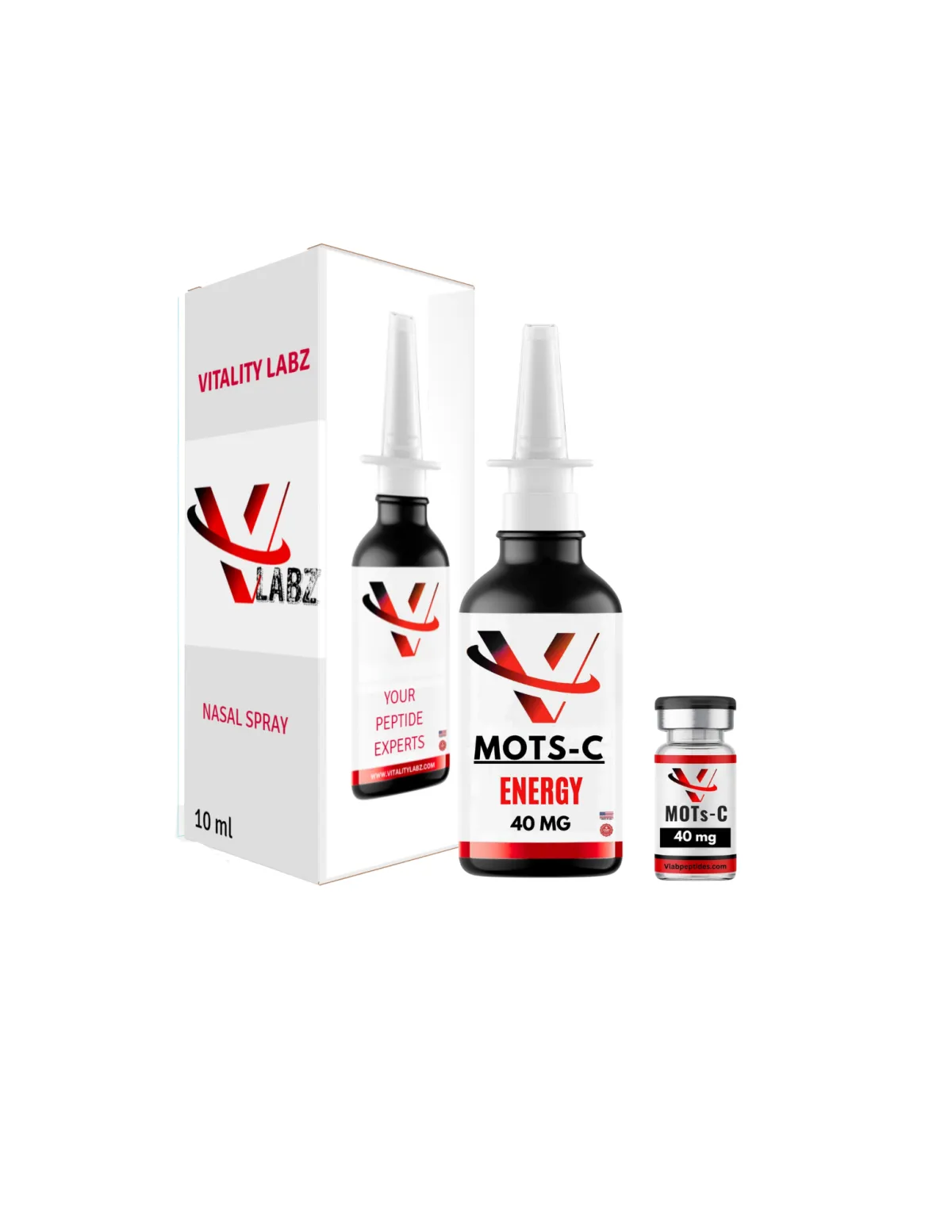
MOTS-C
MOTS-C: The Mitochondrial Peptide Revolutionizing Metabolic Health and Athletic Performance
By Andrew Davenport, Co-Founder, Vitality Labz Peptides
Published: October 2025
Ten years ago, when I first began researching human optimization, I was fascinated by the idea that our bodies might contain hidden molecular switches that could unlock superior energy and performance. That fascination led me to discover MOTS-C, a mitochondrial-derived peptide that's changing everything we thought we knew about metabolism, aging, and athletic capacity. Today, I'm excited to share what makes this peptide one of the most promising compounds in longevity research.
Key Insight: Unlike most peptides that come from nuclear DNA, MOTS-C is encoded by mitochondrial DNA—making it a direct messenger from your cellular powerhouses. This unique origin gives it unprecedented influence over energy metabolism and metabolic health.
What Exactly is MOTS-C?
MOTS-C stands for "Mitochondrial Open Reading Frame of the Twelve S rRNA-c." While the name might sound complex, the concept is elegantly simple: MOTS-C is a 16-amino acid peptide that acts as a metabolic regulator, encoded by the mitochondrial genome rather than nuclear DNA.
The Mitochondrial Connection
Your mitochondria are often called the "powerhouses" of your cells, and for good reason. They convert nutrients into ATP, the energy currency that fuels everything from muscle contraction to brain function. What's revolutionary about MOTS-C is that it represents a form of communication from your mitochondria to the rest of your body—a molecular signal that tells cells how to optimize energy usage.
Discovery and Development
MOTS-C was discovered relatively recently by researchers at the University of Southern California. Dr. Pinchas Cohen and his team identified this peptide as part of a new class of mitochondrial-derived peptides (MDPs) that challenge traditional understanding of how mitochondria communicate with the nucleus and regulate cellular function.
How MOTS-C Works: The Metabolic Regulator
Primary Mechanisms of Action
Glucose Metabolism Enhancement
Research indicates that MOTS-C primarily targets skeletal muscle tissue, where it enhances glucose uptake and utilization. The peptide activates the AMPK pathway—a crucial metabolic sensor that helps cells respond to energy demands. When AMPK is activated, cells become more efficient at burning glucose and fat for energy.
Insulin Sensitivity Improvement
Studies have shown that MOTS-C may improve insulin sensitivity, helping cells respond more effectively to insulin signals. This has profound implications for metabolic health, as improved insulin sensitivity is associated with better body composition, reduced fat storage, and enhanced energy utilization.
Mitochondrial Function Support
MOTS-C appears to support mitochondrial biogenesis—the creation of new mitochondria—and improves overall mitochondrial function. More efficient mitochondria mean better energy production, reduced oxidative stress, and potentially slower cellular aging.
Folate-AICAR Pathway Activation
At the molecular level, MOTS-C activates the folate-AICAR pathway, which plays a crucial role in cellular metabolism and has been linked to the beneficial effects of exercise on metabolic health.
The Research Behind MOTS-C
Metabolic Disease and Obesity Studies
Animal studies have demonstrated impressive metabolic effects:
Weight Management: Mice treated with MOTS-C showed reduced weight gain even when fed high-fat diets
Fat Reduction: Research indicates significant decreases in fat mass accumulation
Glucose Tolerance: Improved glucose handling and reduced insulin resistance markers
Metabolic Flexibility: Enhanced ability to switch between fuel sources
Exercise and Performance Research
One of the most exciting aspects of MOTS-C research is its connection to physical performance:
Endurance Enhancement: Studies show MOTS-C may improve exercise capacity and endurance
Recovery Support: Potential benefits for post-exercise recovery and adaptation
Metabolic Efficiency: Better fuel utilization during physical activity
Age-Related Decline: May help counteract age-related decreases in exercise capacity
Aging and Longevity Implications
Research suggests MOTS-C levels naturally decline with age, and this decline may contribute to age-related metabolic dysfunction:
Cellular Aging: MOTS-C supplementation may support healthy cellular aging processes
Metabolic Health: Could help maintain metabolic function as we age
Stress Resistance: May improve cellular resistance to metabolic stress
Healthspan Extension: Potential to extend the period of healthy, functional aging
Practical Applications of MOTS-C
For Athletes and Active Individuals
Performance Enhancement Protocol
Support for endurance training adaptations
Improved recovery between training sessions
Enhanced metabolic efficiency during exercise
Potential support for maintaining lean muscle mass
Training Integration
Research suggests MOTS-C may be particularly beneficial when integrated with regular exercise, potentially amplifying the metabolic benefits of training.
For Metabolic Health Optimization
Weight Management Support
May support healthy weight management efforts
Potential benefits for body composition
Support for metabolic rate and energy expenditure
May help reduce visceral fat accumulation
Insulin Sensitivity Protocol
Research indicates potential benefits for glucose metabolism
May support healthy insulin function
Could help with metabolic flexibility
Potential support for those with metabolic concerns
For Longevity and Healthy Aging
Age-Related Metabolic Support
May help counteract age-related metabolic decline
Potential support for maintaining energy levels
Could support healthy aging processes
May help preserve metabolic flexibility with age
Research Dosing and Protocol Considerations
General Research Parameters
Important Note: MOTS-C is currently a research compound, and the following information is based on animal studies and emerging research. All information is provided for educational purposes only.
Research Dose Ranges
Animal studies typically use doses scaled by body weight
Research protocols vary based on specific study objectives
Duration of administration varies from acute to chronic studies
Most research involves subcutaneous administration
Timing and Cycling Considerations
Administration Timing
Research suggests several timing strategies:
Pre-exercise administration in some performance studies
Daily administration for metabolic studies
Varying protocols based on research objectives
Research Cycle Lengths
Published studies have examined:
Acute single-dose effects
Short-term protocols (weeks)
Longer-term administration (months)
Continuous versus intermittent protocols
Combination Research
Some studies have explored MOTS-C in combination with:
Exercise training programs
Other mitochondrial-supporting compounds
Metabolic health interventions
Dietary modifications
Quality and Purity Standards
What to Look for in Research-Grade MOTS-C
Purity Requirements
Minimum 98% Purity: Essential for reliable research
Third-Party Testing: HPLC and mass spectrometry verification
Certificate of Analysis: Documentation of purity and composition
Proper Storage: Lyophilized powder with appropriate storage conditions
Manufacturing Standards
GMP-certified facilities
Sterile production environments
Proper peptide synthesis protocols
Quality control at every production stage
Storage and Handling
Lyophilized (Powder) Form:
Store at -20°C (freezer) for long-term stability
Can remain stable at room temperature for short periods (2-3 weeks)
Protect from light and moisture
Use desiccant packs to prevent humidity exposure
Reconstituted Form:
Store at 2-8°C (refrigerator) for up to 2 weeks
For longer storage, freeze at -20°C in single-use aliquots
Avoid repeated freeze-thaw cycles
Use bacteriostatic water for reconstitution to extend stability
Safety Considerations and Research Limitations
Current Research Status
It's important to understand where MOTS-C stands in scientific development:
Preclinical Stage: Most research has been conducted in animal models
Limited Human Data: Human studies are still emerging and limited
Long-Term Effects: Long-term safety data in humans is not yet available
Individual Variation: Responses may vary between individuals
Reported Observations from Research
Animal studies have generally found MOTS-C to be well-tolerated, with:
No significant adverse effects in most studies
Good safety profile at research doses
No apparent toxicity concerns in short to medium-term studies
Considerations for Research Applications
Should only be used in appropriate research settings
Proper institutional approval and oversight required
Documentation and monitoring essential
Not approved for human consumption or therapeutic use
The Future of MOTS-C Research
Emerging Research Directions
Clinical Translation
The research community is increasingly interested in translating animal findings to human applications:
Human clinical trials for metabolic disorders
Studies in aging populations
Performance enhancement research in athletes
Potential therapeutic applications for metabolic disease
Mechanism Understanding
Ongoing research aims to better understand:
Precise molecular mechanisms of action
Tissue-specific effects and signaling pathways
Interactions with other metabolic regulators
Genetic variations affecting MOTS-C response
Novel Applications
Researchers are exploring MOTS-C for:
Age-related metabolic decline
Mitochondrial dysfunction disorders
Metabolic syndrome and diabetes
Exercise mimetic applications
Cognitive health and brain metabolism
Personalized Metabolic Medicine
The future may include:
Genetic testing to predict MOTS-C responsiveness
Personalized dosing based on metabolic phenotype
Integration with comprehensive metabolic health programs
Biomarker-guided protocol optimization
MOTS-C at Vitality Labz
Our Commitment to Research Excellence
At Vitality Labz, we understand that cutting-edge research requires uncompromising quality. Our MOTS-C 40mg offering represents:
99%+ Purity: Verified by third-party testing
Research-Grade Quality: Suitable for serious scientific investigation
Proper Storage: Shipped and stored under optimal conditions
Documentation: Complete certificates of analysis provided
Educational Support: Access to research resources and information
Supporting the Research Community
We're committed to advancing scientific understanding by:
Providing researchers with high-quality compounds
Maintaining current with latest research developments
Offering educational resources and protocol information
Supporting responsible research practices
Key Takeaways
What We Know About MOTS-C:
A unique mitochondrial-derived peptide with metabolic effects
Promising research in metabolism, exercise, and aging
Potential to support glucose metabolism and insulin sensitivity
May enhance exercise capacity and recovery
Could play a role in healthy aging and longevity
Research Considerations:
Currently in preclinical and early clinical research stages
Long-term human safety data still emerging
Quality and purity are critical for reliable research
Proper research protocols and oversight essential
Not approved for human consumption or therapeutic use
Future Outlook:
Growing scientific interest and research investment
Potential for clinical applications in metabolic health
May contribute to personalized metabolic medicine
Exciting possibilities for healthy aging interventions
Conclusion
MOTS-C represents a fascinating frontier in metabolic health research. As a mitochondrial-derived peptide with unique properties, it offers insights into how our cellular powerhouses communicate with the rest of our bodies and regulate energy metabolism. While research is still in relatively early stages, the potential applications for metabolic health, athletic performance, and healthy aging are extraordinary.
For researchers interested in exploring this compound, maintaining the highest standards of quality and following proper research protocols is essential. At Vitality Labz, we're committed to supporting the research community with premium-quality compounds and the resources needed to advance scientific understanding.
The story of MOTS-C is still being written, and every quality research study contributes to our growing knowledge of this remarkable peptide.
About Andrew Davenport
Andrew Davenport is the co-founder of Vitality Labz Peptides and has spent over a decade researching human optimization and longevity. His passion for making cutting-edge science accessible has helped thousands understand and explore the potential of research peptides.
Connect with Andrew: [email protected]
For Research Inquiries
Visit vlabpeptides.com to explore our complete line of research-grade peptides and NAD+ precursors.
All products are third-party tested for purity and intended for research purposes only.
Important Legal and Safety Information
FDA Approval and Regulatory Status
The research compounds discussed in this article have not been evaluated by the Food and Drug Administration (FDA). MOTS-C is not approved by the FDA for human consumption, therapeutic use, or as a dietary supplement. This compound is intended for laboratory research purposes only.
Medical Disclaimer
This information is not intended to diagnose, treat, cure, or prevent any disease. The content provided is for educational and informational purposes only and should not be construed as medical advice. Always consult with qualified healthcare professionals before making any health-related decisions.
Research Use Only
MOTS-C mentioned in this article is intended for research purposes only. It is not intended for human or animal consumption. Research should only be conducted by qualified personnel in appropriate laboratory settings following proper safety protocols.
Quality and Purity Statements
While Vitality Labz provides third-party testing for purity and quality assurance, individual results in research applications may vary. Proper storage, handling, and usage protocols must be followed to maintain compound integrity. We make no guarantees regarding research outcomes or applications.
