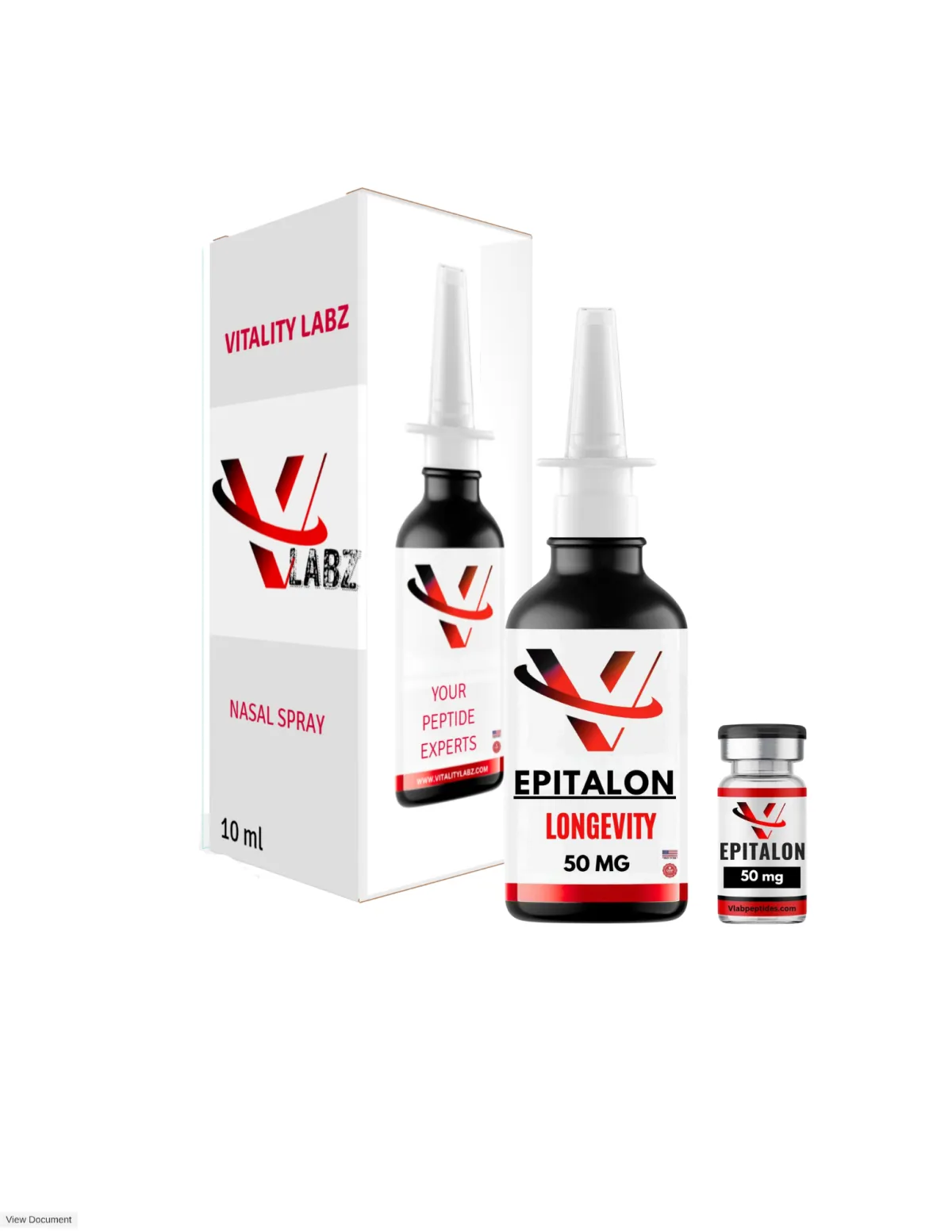
Epitalon
Epitalon: Telomeres, Aging, and the Quest for Extended Healthspan
By Andrew Davenport, Co-Founder, Vitality Labz Peptides
Published: November 2025
Among all the peptides I've researched over the past decade, few have captured my imagination quite like Epitalon. This four-amino acid peptide, developed in Russia and studied for over 40 years, targets one of aging's most fundamental mechanisms: telomere shortening. Today, I'll explore what makes Epitalon unique in longevity research.
Key Insight: Epitalon (also spelled Epithalon) is one of the few compounds shown in research to actually increase telomere length in human cells—a finding that has profound implications for understanding cellular aging and longevity.
What is Epitalon?
Epitalon is a synthetic peptide consisting of four amino acids (Ala-Glu-Asp-Gly) that mimics the activity of epithalamin, a natural hormone produced by the pineal gland. Developed by Professor Vladimir Khavinson in Russia, it's been studied since the 1980s for its potential anti-aging and longevity-promoting properties.
The Telomere Connection
Telomeres are protective caps on the ends of chromosomes that shorten with each cell division. When telomeres become too short, cells can no longer divide and become senescent or die—a fundamental mechanism of aging. Epitalon works by activating telomerase, the enzyme that rebuilds telomeres.
How Epitalon Works
Telomerase Activation
Research indicates Epitalon activates telomerase enzyme, which:
Adds DNA sequences to telomere ends
Protects chromosomes from degradation
Potentially extends cellular lifespan
Supports cellular regeneration capacity
Pineal Gland Regulation
Epitalon also appears to regulate pineal gland function, influencing:
Melatonin production and circadian rhythms
Sleep quality and duration
Hormonal balance
Age-related pineal gland function
Antioxidant Effects
Studies suggest Epitalon has antioxidant properties:
Reduces oxidative stress markers
Protects against free radical damage
Supports cellular health
May reduce age-related oxidative damage
The Research Evidence
Telomere Length Studies
Human clinical research has shown:
Telomere Extension: Increased telomere length in blood cells
Age Groups: Benefits observed in 60-65 and 75-80 age ranges
Comparable Efficacy: Similar to natural epithalamin effects
Sustained Effects: Changes observed after treatment courses
Longevity Research
Animal studies have demonstrated:
Lifespan Extension: Increased lifespan in multiple species
Healthspan Benefits: Improved quality of life in aged animals
Age-Related Disease: Reduced incidence of age-related conditions
Tumor Suppression: Decreased spontaneous tumor formation
Human Clinical Studies
Long-term studies in elderly populations showed:
Improved cardiovascular function
Better lipid profiles
Enhanced immune system markers
Reduced mortality rates over study periods
Improved biomarkers of aging
Practical Applications
For Longevity and Anti-Aging
Age-Related Cellular Health
Support for cellular regeneration capacity
Protection against telomere shortening
Maintenance of cellular function with age
Potential healthspan extension
Circadian Rhythm Optimization
Support for healthy sleep patterns
Melatonin production optimization
Regulation of circadian biology
Age-related sleep quality improvement
For Specific Health Goals
Immune System Support
Enhanced immune cell function
Improved immune surveillance
Support for age-related immune decline
Better resistance to infections
Cardiovascular Health
Improved cardiovascular biomarkers
Better lipid profiles
Support for healthy blood pressure
Protection against age-related cardiovascular changes
Research Protocols
Dosing Strategies
Common Research Approaches:
Intensive Cycles: 10-20 days of daily administration
Frequency: Repeated cycles 2-4 times per year
Dose Range: Varies in research from 5-20mg per cycle
Administration: Typically subcutaneous or intramuscular
Timing and Cycling
Research protocols typically use:
10-day intensive cycles
Rest periods between cycles (2-3 months)
Repeated annual or bi-annual treatment
Evening administration in some protocols
Biomarker Monitoring
Research often tracks:
Telomere length measurements
Biological age markers
Immune function parameters
Cardiovascular health indicators
Sleep quality and circadian markers
Safety Profile
Research Observations
Decades of research indicate Epitalon is generally well-tolerated:
Minimal side effects in clinical studies
Good safety profile at research doses
No significant adverse events reported
Well-tolerated in elderly populations
Theoretical Considerations
Telomerase and Cancer Concerns:
While cancer cells use telomerase to achieve immortality, research suggests:
Epitalon's tumor-suppressive effects in animal studies
Different mechanisms than cancer telomerase activation
Potential protective rather than promoting effects
No increased cancer risk observed in long-term studies
Quality and Purity
Essential quality markers for research:
98%+ Purity: Verified by HPLC
Correct Sequence: Ala-Glu-Asp-Gly tetrapeptide
Sterility: For injectable research applications
Proper Storage: Maintained stability
The Science of Telomeres and Aging
Why Telomeres Matter
Telomere length is associated with:
Biological age (often more than chronological age)
Cellular health and regeneration capacity
Risk of age-related diseases
Overall longevity potential
The Telomerase Strategy
Activating telomerase offers potential benefits:
Maintaining cellular division capacity
Supporting tissue regeneration
Preserving stem cell function
Slowing cellular aging processes
Future Research Directions
Clinical Applications
Potential future uses being explored:
Age-related disease prevention
Regenerative medicine applications
Healthspan extension protocols
Combination with other longevity interventions
Mechanism Studies
Ongoing research into:
Precise molecular mechanisms
Gene expression changes
Epigenetic effects
Tissue-specific actions
Epitalon at Vitality Labz
Research-Grade Quality
Our Epitalon 50mg meets stringent standards:
99%+ Purity: Third-party verified
Proper Synthesis: Correct tetrapeptide sequence
Complete Testing: Full analytical panel
Documentation: Certificate of Analysis provided
Key Takeaways
Understanding Epitalon:
Synthetic tetrapeptide based on pineal gland hormone
Activates telomerase and extends telomeres
Decades of research supporting safety and efficacy
Multiple mechanisms supporting longevity
Research Evidence:
Demonstrated telomere lengthening in humans
Lifespan extension in animal studies
Improved healthspan and biomarkers
Good safety profile in clinical research
Practical Use:
Typically used in cycles rather than continuously
Often combined with comprehensive longevity programs
Quality and purity critical for reliable research
Professional guidance recommended
Conclusion
Epitalon stands out in longevity research for its direct effects on telomere length and decades of safety data. While we're still uncovering all its mechanisms, the existing evidence suggests it may offer genuine anti-aging benefits through multiple pathways. At Vitality Labz, we're proud to support longevity research with pharmaceutical-grade Epitalon.
About Andrew Davenport
Andrew Davenport is the co-founder of Vitality Labz Peptides and has spent over a decade researching human optimization and longevity.
Connect with Andrew: [email protected]
Important Legal and Safety Information
FDA Approval and Regulatory Status
Epitalon has not been evaluated or approved by the FDA. It is not approved for human consumption or therapeutic use. This compound is intended for laboratory research purposes only.
Medical Disclaimer
This information is for educational purposes only. Always consult qualified healthcare professionals before making health-related decisions.
Research Use Only
Epitalon is intended for research purposes only. Not for human consumption.
By accessing this information, you acknowledge these disclaimers and agree to use this information solely for educational and research purposes.
